Showing posts with label Nepal. Show all posts

Ghode Jatra 2008

Sunday, April 6, 2008

According to legend, the ancient people of Kathmandu Valley had defeated an evil demon and they buried in on the site at Tudikhel show grounds. Then there a custom was created and it is said that unless the ground is trampled on by the horses every year, the demon will rise again. It is believed that once the devil arises again it will wreak a terrible vengeances on the people again as it had done once. So, each year the Ghode Jatra festival is organized by Nepalese Army. Ghoda means horse and Jatra means festival in Nepali language. Lots of demonstration of horse riding along with some stunts like motorcycle stunts, cultural performances, gymnastic displays, and other programs by Nepalese Army can been seen on this day at Tudikhel, Kathmandu.

Usually the King of Nepal is invited as the special chief guest but since the changes in our nation has occurred, the head of the nation has been invited as the special chief guest. Last year our prime minister, Girija Prasad Koirala, attended the festival. This year too he was invited but he didn't attend the festival owing to some personal problems of his own. There is no entrance fee for this festival and anyone can view it on the big showground in the center of the valley. Some national television have the live telecasting of the festival as well.

Fulpati 2007

Wednesday, November 7, 2007

After Ghatasthapana, Fulpati is celebrated as one of the major days of dashain. Fulpati lies on the seventh day of the bright half of the lunar calendar in the month of Ashwin or Asoj and this year year it lied on 18th of October, 2007. On this day, the Fulpati or the jamara for Royal families is carried on foot by the six attendants from the Magar community, a tribe known for their valour during war, from their ancestral Royal Gorkha palace to Rani Pokhari, Kathmandu, and in the evening they are taken to Royal Palace at Hanuman Dhoka along with a huge parade. This is a ritual that symbolises the conquest of the Kathmandu valley more than two centuries ago by the king's ancestor Prithvi Narayan Shah. The Fulpati, an offering of flowers and fruit, is blessed at the temple first. It is then taken to the palace to bring luck and long life to the royal family.

However, from this year, the tradition or the two-century old tradition is broken down and the holy offering went to the residence of Prime Minister Girija Prasad Koirala. From this year, the Prime Minister has taken over the king's social and religious roles after the fall of the royal government last year, as he is believed to be ruling the nation and not the king.

I would just like to send a gift to all my friends in New York City in this auspicious occasion of Fulpati. I have found a website with all the New York City nursing homes list in it. I hope this helps out when you are in need of a nursing home out there. Happy Fulpati!!!

Best holiday idea is cruise vacations because it gives a totally new experience. To save your vacation cost last minute cruise deals are best for you. You can get longest trips for Mediterranean cruises. For a good journey you can use cruise clothes however some cruises provide you free like Atlantis cruise.

Ghatasthapana 2007

Tuesday, November 6, 2007

Ghatasthapana is the celebrated as the first day of the greatest festival of Nepal, Bada Dashain. The “Navaratri Parba” or the night nights festival of Bada Dashain also commences on the same day. The day lies on the first day of the bright half of the lunar calendar in the month of Ashwin or Asoj. This year it lied on 12th of October, 2007.

On the day of Ghatasthapana, all Nepalese worship Diyo (an oil-fed lamp), Kalas (auspicious jar), and Lord Ganesh, and the most of the people sow maize and barley seeds in a jar filled with soil which is brought from the river mostly containing sand and cow dung for germination of the auspicious Jamara (barley shoots). From today, prayers are offered to goddess Mahakali, Mahalaxmi and Mahasaraswati at the Dasain Ghar, and to all the Durga Bhawani goddess around the city, marking the beginning of the Navaratri. There are so many of shrines called Shaktipith where devotees will visit and offer their homage this dashain. Some of the main shrines are Naxal Bhagawati, Shobha Bhagawati, Maitidevi, Guheswori, Bhadrakali, Kalikasthan, Sankata, Mahankalsthan, Naradevi, Bijayeswori, Indrayani, Dakshinkali, Chamunda, etc.

A lot will be happening from today for the next 15 days. Each day has its own importance and values. I will try to review the each day and try to find out the main happening thing each day and importance of the day from hereforth. For now, it is Ghatasthapana, the first day of the greatest festival that happens on the Bada Dashain.

One more website to visit for my readers. Please view Santa Monica plastic surgery and send me the comments of what you feel of their services.

For promoting air travel many US Airlines are providing attractive deals for their customers. To get cheap airline tickets you can search through websites. The Emirates Airlines are unique travel experience for their customers. You can check airline rate before using their service and customer feedback can also help you. Reviews have ranked Allegiant Airlines as best airline service. Many companies have started airline self-service for satisfaction of their customers. However due to airline on-time statistics helped customer to use airline for their vacations.

Dashain Festival 2007 Ends From Today

Thursday, October 25, 2007

One of the greatest festivals in Nepal, Bada Dashain, will end today. I haven't been around to cover up the story behind the each day of those 15 days of Dashain but I will soon write about my experience with all the stories behind the most important festival that happens once a year and celebrated for whole 15 days. All the schools, colleges, and government offices remain closed for these 15 days.

Today is the last day and with it all the festivals spirit ending and people will now turn back to their work and daily lives. I am sure most of the people even going abroad have come back for this great festival and they have been with their families and enjoying their precious moment together.

I hope Goddess Durga will give me blessing and may be sooner I will be in those billionaire's list. Well I know I am asking but I love visiting Lindemann and Family page in wikipedia and viewing the billionaire list. So I am just praying hard to the Goddess Durga.

Happy Dashain to all of the Nepali people around the world!

Balaju Park (Bais Dhara Balaju)

Sunday, October 7, 2007

Few decades ago, Balaju was not as beautiful as it is right now. It used to be just a village and not it has turned into a beautiful park, and there is quite dense population these days. You can get a tempo, microbus, bus, or even a taxi if you want a fast traveling with little more fare from National Theatre, Jamal. Well even if you like walking, within an hour, you will reach the destination as it is situated close to the outskirts of the northern side of Kathmandu. The industrial district around Balaju is the most important in the valley but it does not affect the quiet surroundings of the park in any way.

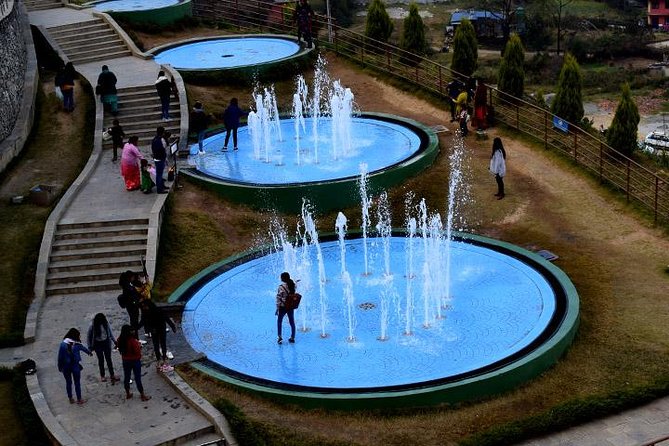
After you reach to the Balaju area, you will need to pay some cheap entrance fee to get inside the beautiful park. Lots of beautiful bamboos, trees, and varieties of flowers, ponds with fishes, and the twenty-two gushing waterspouts can be found inside the Balaju Park. The twenty-two gushing waterspouts also gave the park its name as “Bais dhara Balaju.” There is also a modern swimming pool where you can enjoy swimming in the sumer and a smaller image of the sleeping Vishnu at Budhanilkantha.

In front of the sleeping Vishnu a small, typically Nepalese, temple is flanked by a row of Hindu images including elephant-headed Ganesh, Buddha protected by the hood of a serpent and Bhagwati. A stupa-like structure shelters a many-armed goddess, unusual in a Buddhist stupa, and an image of Harihar – half Vishnu and half Shiva. The hands on one side hold trishul, a symbol of Shiva (weapon), while on the other side the hands hold chakra (weapon) and sankha, the sympbols of Vishnu. There is also a small phallical-shaped linga surrounded by four pillars and an image of the bullock Nandi. The site is not more than three centuries old but makes an interesting visit due to this curious juxtaposition of Hindu deities.

Kakani

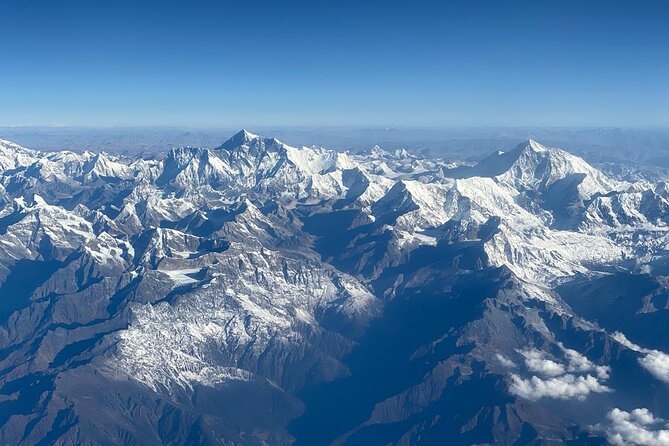
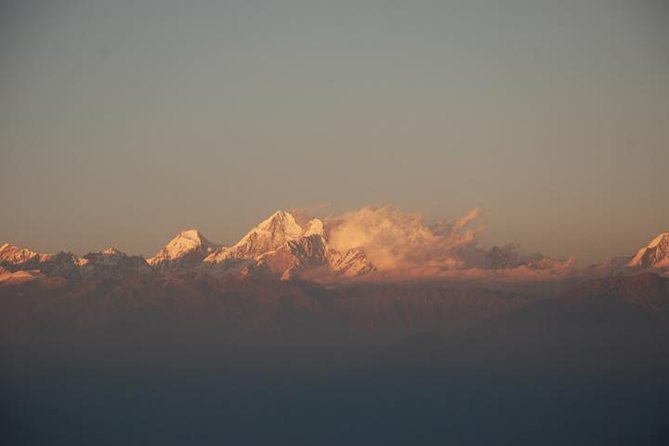
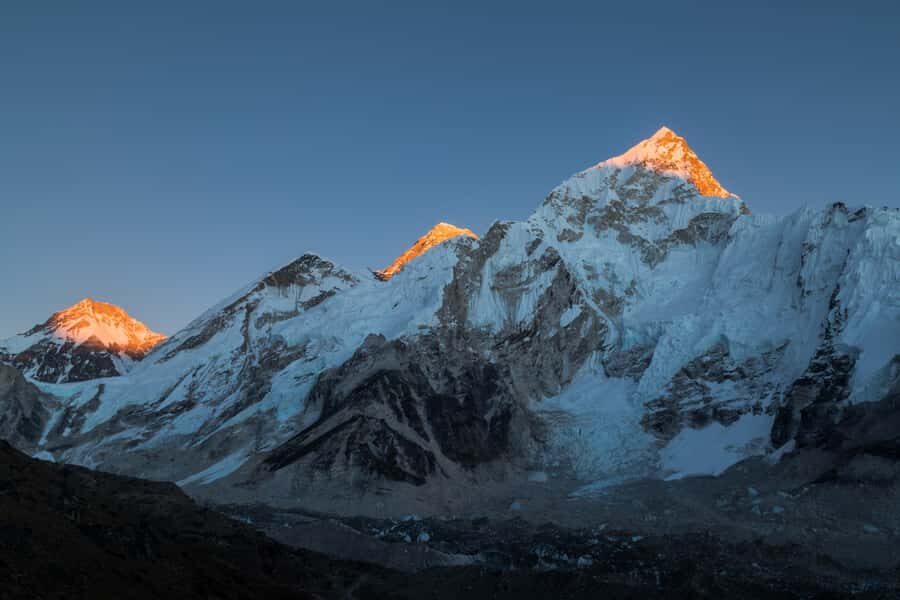
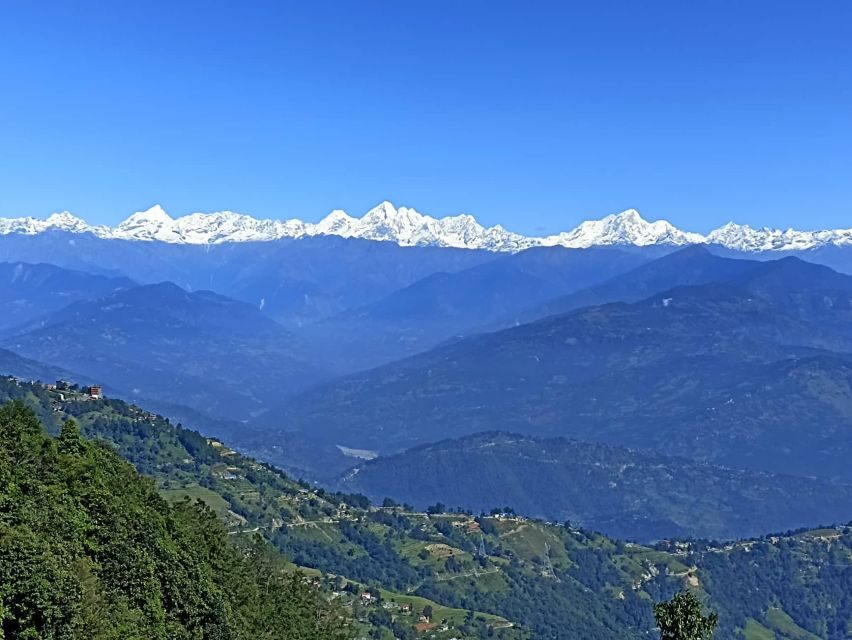
This village is situated on a ridge northwest of Kathmandu and offers good views of the western and central Himalayas. Although I personally prefer the view from Nagarkot, those interested in enjoying the variety of Himalayan scenery, especially magnificent views of Ganesh Himal, should go there. It is quieter than Nagarkot but the food available has less variety and caters less to western tastes. There is a lodge run by the Department of Tourism which has the cheapest prices for the rooms available there.

To get to Kakani is not that difficult as it is a short trip from Kathmandu Valley. You can take a bus or a minibus at Sorakhutte at Kaulethan about two hours from Kathmandu on the road to Trisuli. From thee it is about one hour’s walk along a dirt road to the top of the ridge. You can find lots of Kathmandu Valley people coming there in groups to have a nice day picnic as well. I am sure this would be one hell of experience for the nature lovers who mostly love the scenery of the great Himalayas and beautiful hills seen from Kakani.

Dyochhen

In the ancient times, the activities of gods and goddesses were interlinked with human being, and somehow resembled too. Like normal people, they attended jatras, attended cultural functions, accepted offerings, and lived in a house. For every individual activity, human society created separate spaces for god whom they respected the most. House created for god and goddesses were named as dyochhen where dyo means god and chhen means house. Dyochhen existed in the society from earlier period in Kathmandu Valley, and it is thought that the "devakula" represented "dyochhen" and "digvara" represented "pigan"-"peeth".

In Malla period, "Gvara" represented "peeth". This word dyochhen exists till now though there is no longer the practice of constructing them in Nepal. This might be the reason why books that categories Nepalese temples often forget to include "dyochhen." I think the government should look upon these ancient monuments and try to preserve them as it is one of our national treasures.

Dhunge Dhara

Saturday, October 6, 2007

Dhunge dhara is among the magnificent pieces of art that embellish our cultural heritage. Over the centuries, Kathmandu Valley has continually witnessed the constant evolution of numerous religious and monumental buildings that punctuate the public space, providing diverse from and scale, pervading every aspect of life. Dhunge dharas are also no exception.

Its occurrence in Nepal cannot be dated precisely. Many dharas are found to be of Lichhavi period, which reveals that this has been our culture since centuries. Though, over the period of time its basic form has remained relatively unchanged, different terms have been used to represent it. In early Lichhaivi period, it was called “kriti” and it was called “pranali” in the late Lichhavi period. From Malla period onward, it was called “hiti”. Dhunge dhara are the means of water supply in the ancient time. A typical dhunge dhara is called hitigah in Newari language.

Pashupatinath


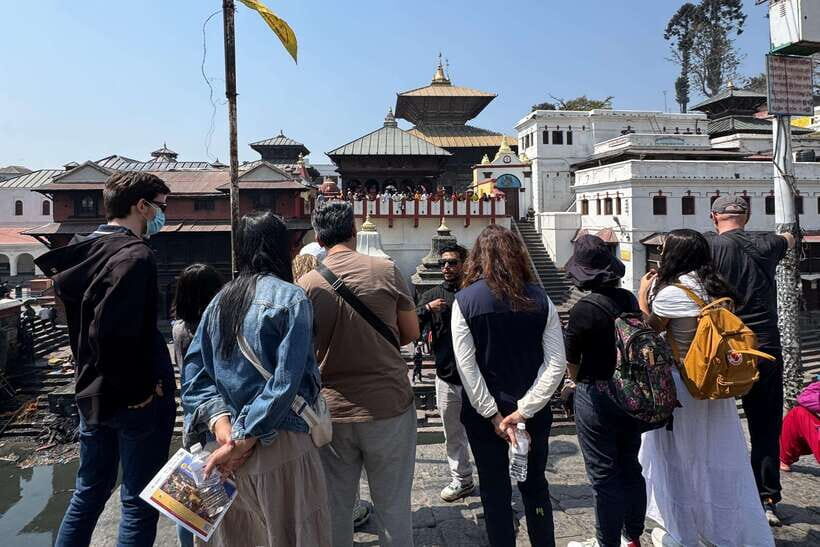
Pashupatinath is the most famous temple in Nepal and is located on the route to Boudhanath. Although non-Hindus are not allowed inside the temple, you can cross the Bagmati River and view the temple from the hill on the other side. Near the entrance you will see many people selling flower,s incense, and other offerings to be made to the deity. Inside is the golden pagoda and on the river banks you can sometimes see dead bodies being cremated on platforms. The Bagmati is a holy river and there is a burning ghat.

Pashupati means Lord of the Animals and nath means god. Pashupatinath is supposed to represent Shiva and the black image inside the temple has four heads. The temple itself is about three centuries old. It was renovated when the previous structure became decrepit. The idol is 600 years old, an earlier one was broken by Moslem invaders in the 14th century.

The big bull, Shiva’s animal (ride), inside the temple was built in the last century. The small bull in front of the temple is about three centuries old. The best time for visiting the temples is on Ekadashi, a day which occurs twice a day each month, 11th day of the full and new moon. On those days, there will be many pilgrims and a special ceremony in the evening called Arati characterized by the ringing of bells. There many also will be devotional music and illuminations. In the month of February, there is a big fair at the temple to celebrate Shiva’s birthday and another fair takes place in November.

Oldest Museum Of Nepal

Friday, October 5, 2007

The Nepal museum, which is one of the oldest museum of Nepal, is close to Swayambhu, and slightly to the south, a convenient visit on the way back to the city. The museum is open from 10:15 to 15:30 in the winder and from 10:30 to 16:30 in the summer. The new building contains many beautiful carvings in wood and some especially interesting bronze idols. The old building illustrates recent Nepalese history with the uniforms and weapons of Nepalese soldiers and generals from the past centuries. A sword with Napoleon presented to a Nepalese Prime Minister and leather cannons captured during the war with Tibet in 1856 are particular attractions.

I haven’t been in the museum for over a decade or so. I even have lost the memories of the things inside in detail. I will surely be going there someday and have more details published. So until then please have some patience and wait for the moment till you read more about Nepal’s oldest and valuable museum.

Don’t forget to subscribe the blog if you want more of this blog on your inbox.

Budhanilkantha

Wednesday, October 3, 2007

The image of “sleeping Vishnu” at Budhanilkatha is probably the largest reclining image of Vishnu in the world. To get there you can take a bus or alternatively you can travel by microbus or tempo through Bansbari, the site of a shoe and leather factory set up with Chinese assistance, and walk in about an hour. The energetic could walk all the way from downtown Kathmandu in a couple of hours or, best of all, ride by bicycle.

Vishnu, sleeping on a bed of snakes, is supposed to have been carved from stone in the 11th century. According to legend Vishnu sleeps continuously for four months of each year, failing asleep with the beginning of the monsoon and awaking when it is over. Each November thousands of pilgrims come here for a big fair on the day he is supposed to wake up. The name Budhanilkantha has nothing to do with Buddha.

Another legend tells of the discovery of the image. A farmer was tilling his field one day and was terrified to find blood coming from the ground at the spot where his plough struck something. An excavation revealed the beautiful image of sleeping Vishnu.

Prayers take place here every morning around 9 am but the kings of Nepal are never allowed to go near the image. Should the king, who is himself supposed to be an incarnation of Vishnu, gaze upon his own image, it is said that he would be cursed. A smaller replica of the image has, therefore, been constructed near the swimming pool at Balaju for the king to visit if he desires. There is also a school, built with British assistance, near Budhanilkantha – it is expected to become the best school in Nepal.

Chobar Gorge

According to legend, when the valley was a lake and Swayambhu an island Manjushree, the god of wisdom, struck the rock at Chobar with his sword and released the valley’s water. With the water thousands of snakes are supposed to have been swept out of the valley – leaving behind the snake king Karkotak who still lives close to the gorge in a pond called Taudaha. The Chobar Gorge is conveniently visited en route to Dakshinkali and the beautiful temple of Pharping can also be included on the trip.

Close to the spectacular gorge is the first cement factory in the valley which has been closed now. These days the most attractive part of the Chobar has been the beautiful hill that has been crowded by couples passing their secret time there. You will also find a lot of groups of people coming for a picnic as well as the place is so close to the valley and has a spectacular view of green hills around. I myself have been there with my friends in some Saturday evenings where we enjoyed the trip and some dry foods with some drinks as well. The wind blowing through our body and the spectacular view will win anyone’s heart there.

Gokarna And Sundarijal

A pleasant couple of hours walk in the vicinity of the Boudanath stupa will take us to the old Newar village of Gokarna, north of the Royal Game Reserve From Bouthnath take the road towards the reserve and turn left on to a dirt road after twenty minutes. Another twenty minutes’ walk will bring you to the beautiful three-storied temple of Shiva called Gokarneswor, Lord of Gokarna. The courtyard has an incredible collection of stone statues of deities from Hindu mythology such as Narad, Surya the Sun God, Chandra the Moon God, Kamadeva the God of Love besides the more conventional images of Shiva and Vishnu. Although they are probably only about a century old I have never seen such a collection in one place in Nepal.

After visiting the temple you can walk up to the village which is inhabited entirely by Newars and is surrounded by the game reserve on the three sides. Although the village is so close to Kathmandu the villagers are very poor and many do not even speak Nepali. There are deer, monkeys, and peacocks in the game reserve. It is a popular picnic spot for the people of Kathmandu and there is some entrance fee to enter the premises as well.

Further down the road are the waterfalls of Sundarijal at the edge of the valley; a pleasant bicycle ride down quiet roads.

Languages In Nepal

Monday, September 24, 2007

Over the past few decades, the literacy of Nepali people have reached to quite good level. Though the village areas are yet to have literacy awareness programs and most of them are still below the literacy level, the urban areas have over 90% of the people literate. Since the schools have English as a compulsory subject, most of the Nepalese people do tend to speak the universal language in Nepal.

The national language of Nepal is Nepali language, often called Nepalese language. The grammar of the Nepali language is quite similar to the Sanskrit language. The Nepali language is not so hard to learn but it is too difficult to master as well. I guess this happens to most of the languages in the world. Nepal has lots of ethnic groups and most of the Nepalese ethnic groups speak their own language. The Kathmandu Valley has been ruled by Newars and the basic natives are Newari people who speak Nepal Bhasa language often called Newari language. The other distinct languages are spoken by the Gurungs, Magars, Rais, Limbus, Tamangs, and Sherpas. In the Teria, Hindi and Maithili are widely spoken and understood.

If you are a tourist, and although learning a few words of Nepal is a good idea and widely appreciated, there is one word every visitor should learn – “Namaste.” This universal Nepalese greeting translates literally as “I salute all divine qualities in you: but it is used as “hello, how are you, pleased to meet you, see you again” and generally a nice thing to say.

Indrajatra 2007 Begins

There are lots of festivals happening around the year for the Hindu people in Nepal. It seems like everyday there is a festival in the name of some gods. I don’t know may be that I am from Newar group I feel as we have most of the feasts going on than any other tribes. But today, 24th of September, 2007, has a special importance if you are in Kathmandu. From a week before you will start Newari people going on for their music band practice. Lots of masked features, namely Lakhes, are out to brighten up the festival which is going to start today. It is called Indrajatra, where Indra means Lord of Heaven and jatra means festival, who is worshipped as God of Rain.

The fields have been planted with crops, the monsoon is in the ending process, and the season for harvesting is coming up. This is the beginning of the best season of the year, which lasts for two months. So this is the time when people worship the god of rain, Indra.

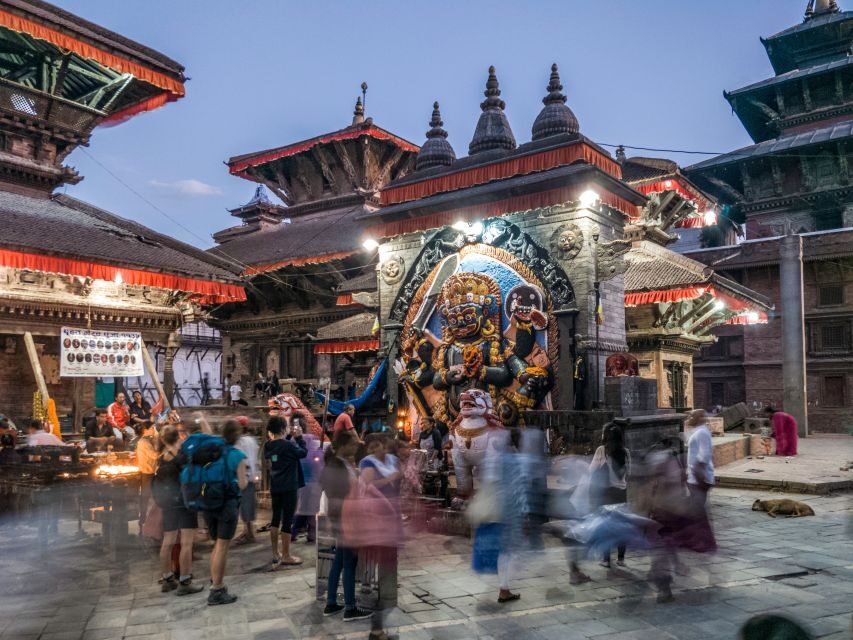
Today is considered as the first day of Indrajatra. The big wooden log which was brought from Sallaghari, Bhaktapur, is installed in front of the Kaal Bhairab at Hanuman Dhoka Durbar Square today. This symbolize that the festival, Indrajatra, is in the air. This wooden log is called Yashi in Newari language. The beginning and the end of the Indrajatra is symbolized by this wooden log. The installment symbolizes the beginning and after the festival it is put down and dragged into the Bagmati river, which symbolizes the end of the festival. The place at Hanuman Dhoka Durbar Square today is crowded with people who watch the installment of the log on that place. The log stands upright till the festival is in the air.

Gaura

I haven’t heard of this festival as of yet but it is in existence. It’s called Gaura. It is celebrated right after Biswokarma Puja. I read in one of the old magazines about it. I tried to find it out but was unable to find much detail. I only got out some parts of the magazines which I am trying to review today. Nepal really has various customs and tradition as it is a place where lots of groups and castes of people live in. So there are so many numerous amounts of festivals that it seems quite difficult to get all account of.

Speaking of Gaura festival, as written in the magazine, it is one of the most important Hindu festivals celebrated in the far western region of Nepal. It is observed by married women, and the ceremonies extend from the fifth to the eighth day of the bright lunar fortnight also called Astami in Nepali. During the festival, the women worship various deities and make ritual offerings to those deities. Devotees pay homage to Lord Shiva and his consort Parvati and seek their blessings.

Biswokarma Puja

In Hinduism, Biswokarma God is considered to be the god which possess all the craftsmanship and provides us the blessing of being a good and perfect craftsmanship. As you might have known that in Hinduism, there are 330,000,000 gods and everyone has a different values and respect and blessings to offer. So there is a day for each deity when they are worshipped and given special attention. The seventh day of the bright lunar fortnight is considered as the day for Biswokarma God. According to Gregorian calendar, it is celebrated on 18th of September this year (2007).

Mostly people living in terai seems to celebrate this occasion more often than the people in hilly or Himalayan region. The people will just gather around to the statue of the Lord Biswokarma which they have made over the past and they would just sing and dance throughout the day. At end of the festival the statue is put down on the river which indicates the end of the festival. Mostly the Indians and terai people seem to make the statue of gods and then at the end of the festival they put down the statue in the river in most of the festivals.

Chatha (Ganesh Chaturthi)

Another festival celebrated right before Rishipanchami is Ganesh Charturthi (chaturthi means the fourth day of the bright lunar fortnight). This year it was celebrated on 15th of September, 2007. The Hindu people worship Lord Ganesh this day. The newar of Kathmandu valley called it Chatha (meaning same as chaturthi in nepali – fourth day of the bright lunar fortnight). It is celebrated hugely in our neighbor country India as well. Devotees pay homage to Lord Ganesh at various temples of Ganesh.

In Kathmandu, there is one special tradition that is carried out this day. The seed of the pear eaten couple of months ago is preserved for this day. The seed is called bakshyapati in Nepali. It is worshipped as Lord Ganesh, as it has appearance of Ganesh (Ganesh has head of an elephant). So after the worshipping. The seed is crushed and inside another edible seed is taken out and it is eaten after it is fried as the form of prashad (offerings eaten by the devotees in the name of god in form of blessings) from Lord Ganesh.

Optional Extension Tour Of Bhaktapur (Bhadgaon)

Friday, September 21, 2007

I thought of excluding these tours but lots of my friends told me to include these parts of Bhaktapur as well as these places to have importance and I am sure anyone who are in Bhaktapur would never want to miss these places. So here is the review with the time span that is needed for visiting those places.

Extension Tour A:
Starting point: Durbar Square (30 minutes)
Take a small lane off Durbar Square to your right passing by typical to-day activities, continue until this lane bisects the main road. As you swing towards the left, you will pass the potters’ area where much of the activity – molding, baking, etc., - takes place in the street. Finally, passing by Talaku Math you will reach Taumadhi Square.

Extension Tour B:
Starting point: Dattatriya Square (45 minutes)
Continue through Dattatriya Square taking Bagiswori Lane. Pass Brahmayani Dyoche, Wakupati Narayan Temple, then the Navdurga Temple – traditional home of the Durga dancers, to Kwathaundau Pokhari, Kwathaundau Math, and as you approach the other entrance to Dattatriya Square, the Salan Ganesh Temple.

Extension Tour C:
Starting point Dattatriya Square (20 minutes)
Near the entrance to Dattatriya Square, as you enter, there is a lane off to your left. Following it, you will pass the Yachhe Ganesh Temple, Salan Ganesh Pokhari with Yache Ganesh Dyoche then Naag Pokhari, which will bring you to the main street near the Sukuldhoka Math.

A Perfect Tour of Bhaktapur (Bhadgaon)

I just found a page in my old magazine where they have maintained a plan of tour around Bhaktapur, formerly known as Bhadgaon, in a single page. I was thinking of writing a whole post about Bhaktapur, but was unsure if one post was enough for the whole tour. So this magazine will definitely help me to share the knowledge and guide my readers to Bhaktapur in just a single post to read.

Total time: 1.5 hours.
Starting point: Durbar Square

The “Golden Gate,” one of the Valley’s most extraordinary architectural masterpieces, built in 1754.

National Art Gallery houses Nepal’s finest collection of paintings also attached to it, exhibition of wood and stone carvings.

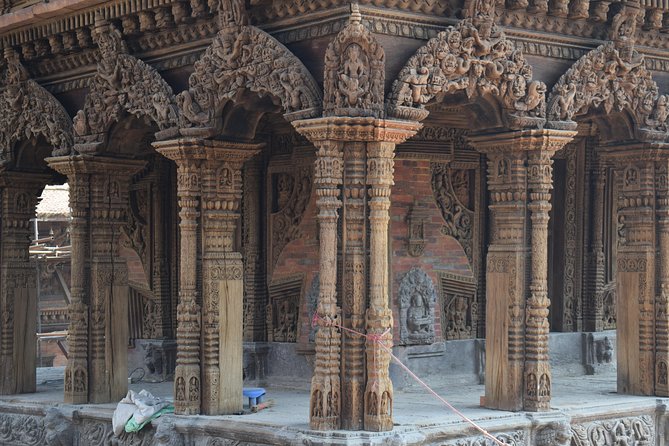
Palace of the 55 Windows, the former royal home of the Malla Kings has uniquely carved and decorated windows.

Temples:
Pashupati
Batsala
Radha
Krishna
Buddhist Vihar


Second stop: Taumadhi Square

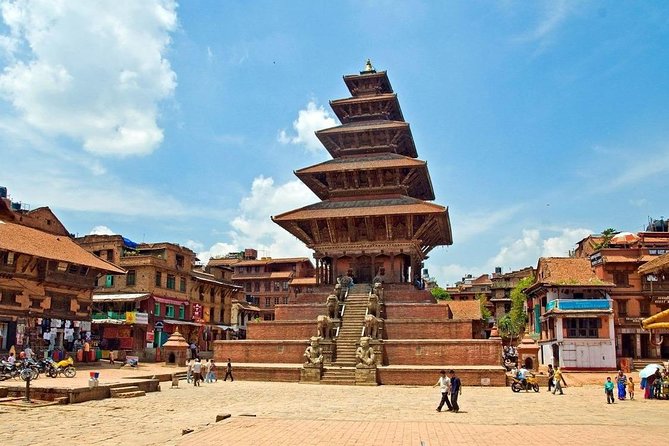
Nyataola Temple built by King Bhuptindra in 1708 and dedicated to the tantric deity, Shiddhi Laxmi.

Bhairab Temple, three stories set on a rectangular base.

Narayan Temple with its beautiful carvings.

Aisamari Satal, this reconstructed building will house a modern restaurant catering to tourists.


Third stop: Sukaldhoka Square
This is one of the main local shopping areas where you can observe the daily life of the people.

Sukul dhoka Math in terms of wood carving and courtyard decoration is one of the most important Maths in Bhadgaon.


Fourth stop: Golmadhi Square

Golmadhi Hiti, a traditional stone tap.

Golmadhi Square has many examples of Newari architecture. Here too, you’ll find the hand-weaving center of Bhadgaon.


Fifth and Last stop: Dattatriya Square

Temples:
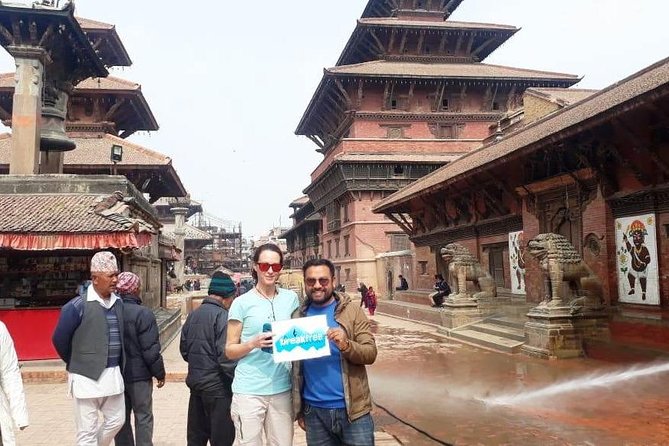
Dattatriya, a three-storied Rama-Shiva-Vishnu trinity temple built originally during the reign of Yaksha Malla in 1427.
Bhimsen Temple
Laxmi Narayan Temple
Pujahari Math with its beautifully carved peacock windows, now the office of the Baktapur Development Project.
Chikampa Math

Jangham Patti.

Taja Math, planned handicraft center.

Chikampha Math, 2nd floor exhibition hall.

Pujahari Math, 2nd floor will house a woodcarving museum.